|
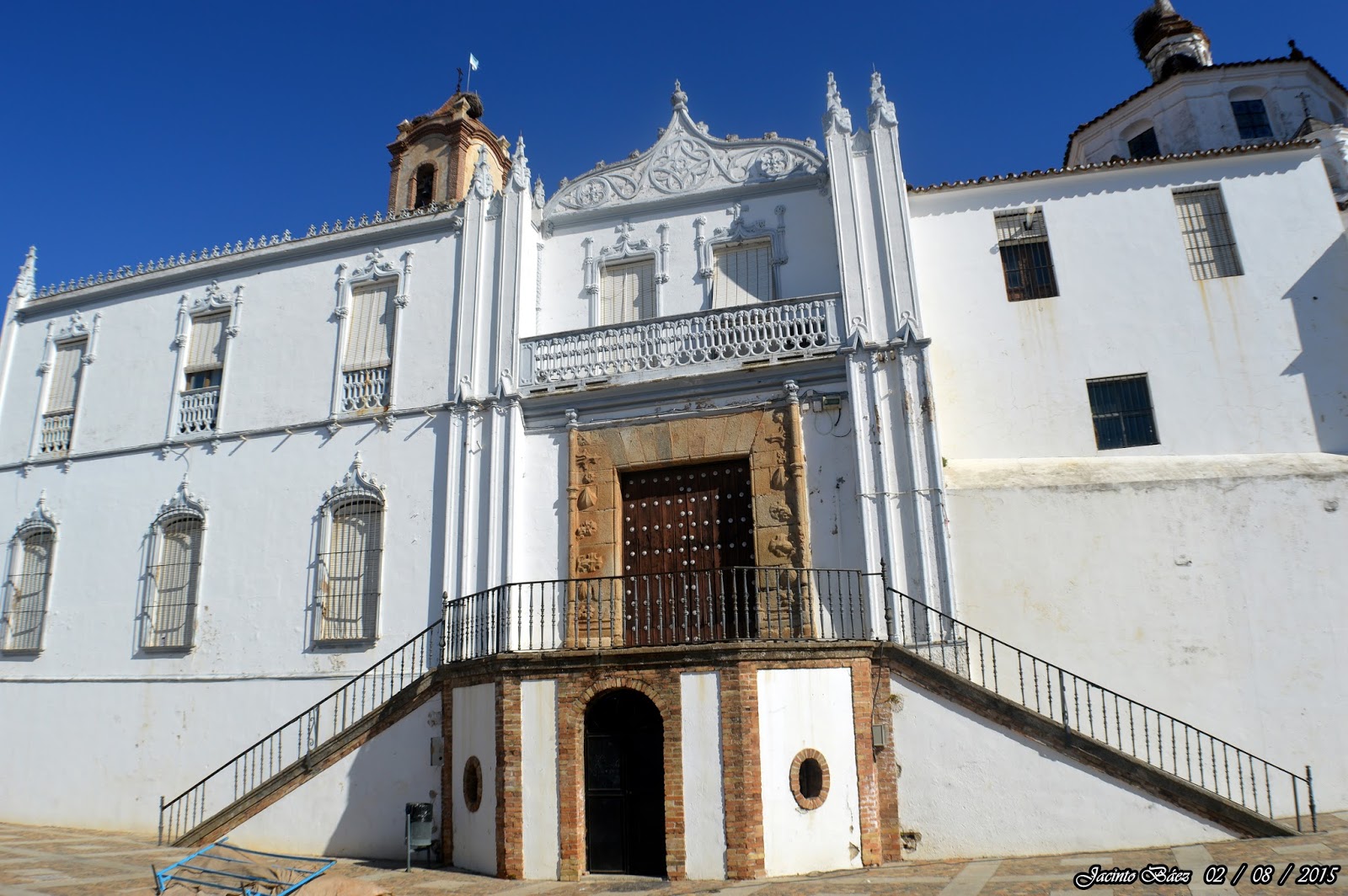
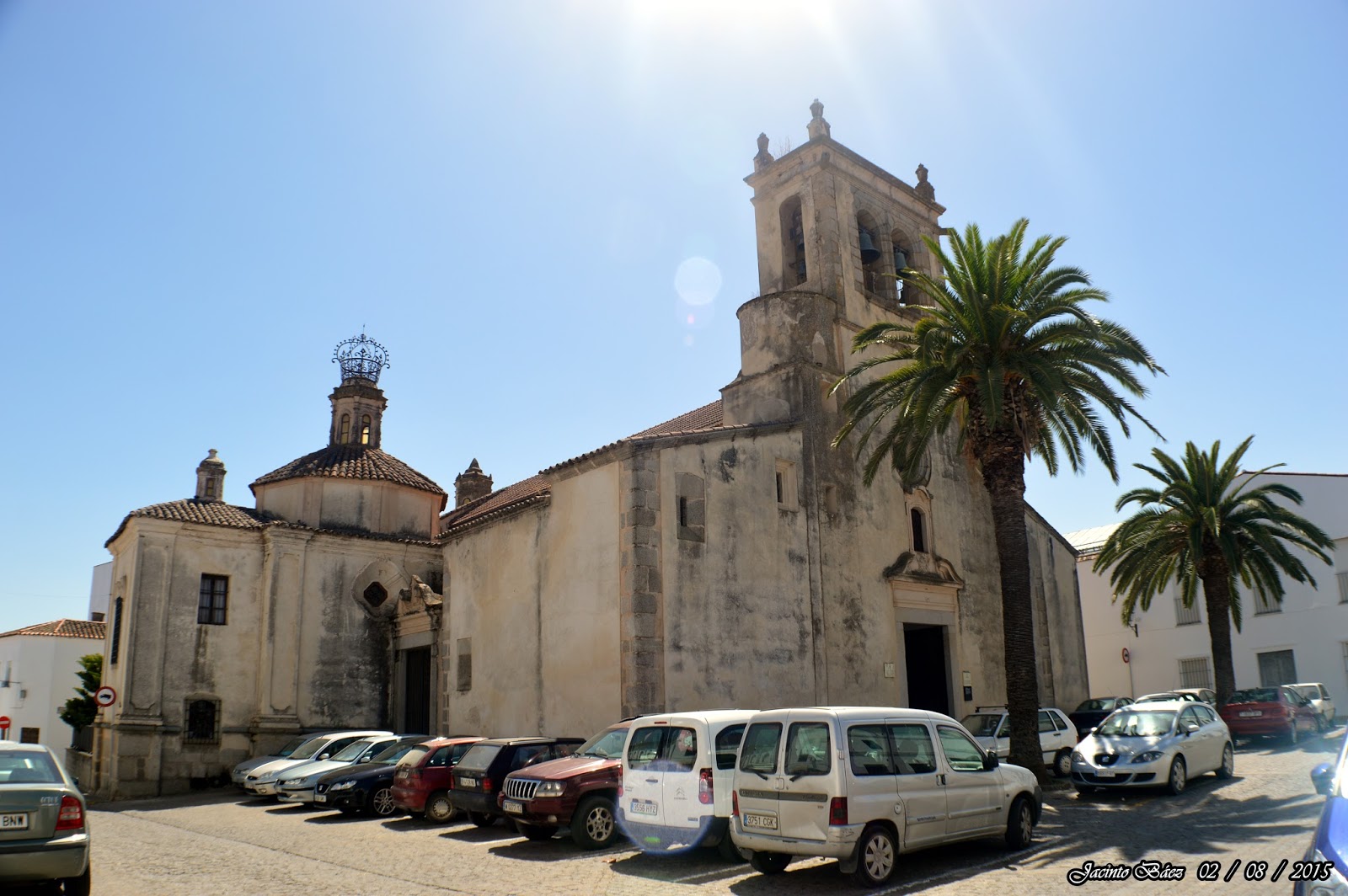
| La iglesia de Santa María de la Plaza está situada en el centro de Fregenal de la Sierra (Badajoz). Considerada como la Iglesia Mayor de la población, y como la más antigua e importante, aparece adosada alCastillo.Adosada a una fortaleza templaria, fue construida hacia 1260 por la orden de Santiago. Fue remodelada en el siglo XVIII de donde le procede el retablo mayor. De la iglesia primitiva solo se conserva la fachada principal, la portada que mira a la plaza y la torre. Presenta una nave central rectangular con una capilla adosada por el lado de la epístola, conocida como capilla del Sagrario.
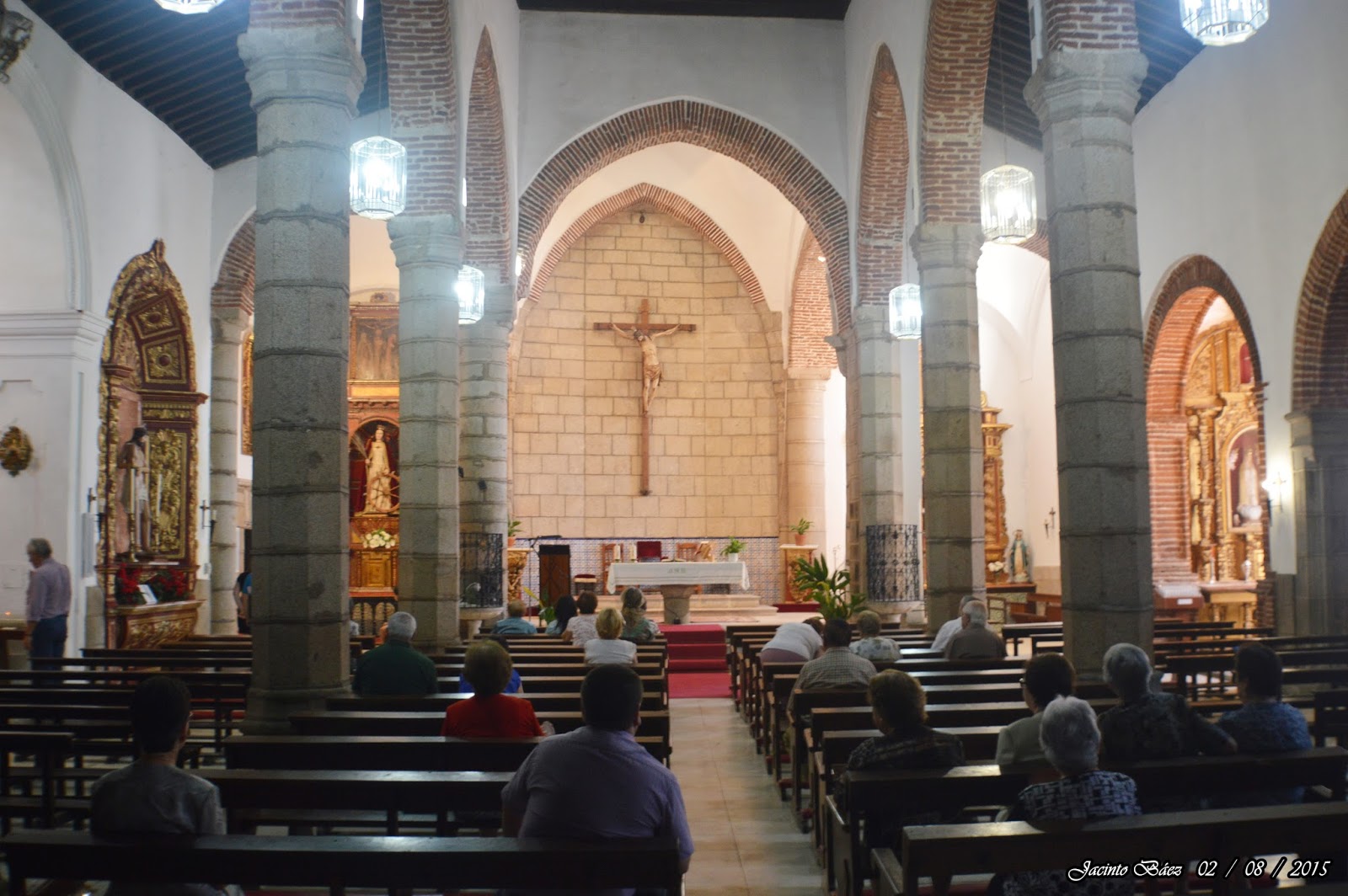
En el interior, la bóveda de medio cañón con lunetos cubre la nave central y los seis retablos adosados al muro (Retablo del Cristo de la Carida, de María Pastora de las Almas, de las Ánimas, de San Pedro, de laVirgen de la Soledad y de San Antonio Abad), excepto al ábside que está cubierto por una cúpula sobre pechinas.
En el retablo mayor, fechado en el siglo XVIII (1732-1740), llaman la atención cuatro columnas que soportan un arco mixtilíneo. El conjunto tiene como imagen principal a la Virgen María, y a su derecha e izquierda Santa Lucía y San Lázaro respectivamente.
Sobresalen también por su interés artístico la escultura del Cristo de la Caridad, del siglo XVI, y la imagen de San José.
En el orden pictórico destacan los lienzos de la Virgen de Guadalupe, del siglo XVII, situado en el coro, y los de San Antonio Abad y la Virgen Pastora, fechados en el siglo XVIII.
El órgano es obra de José Larrea, labrado en Llerena en el siglo XVIII. Los confesionarios, ambos ricamente adornados, son atribuidos a Enrique Granero.
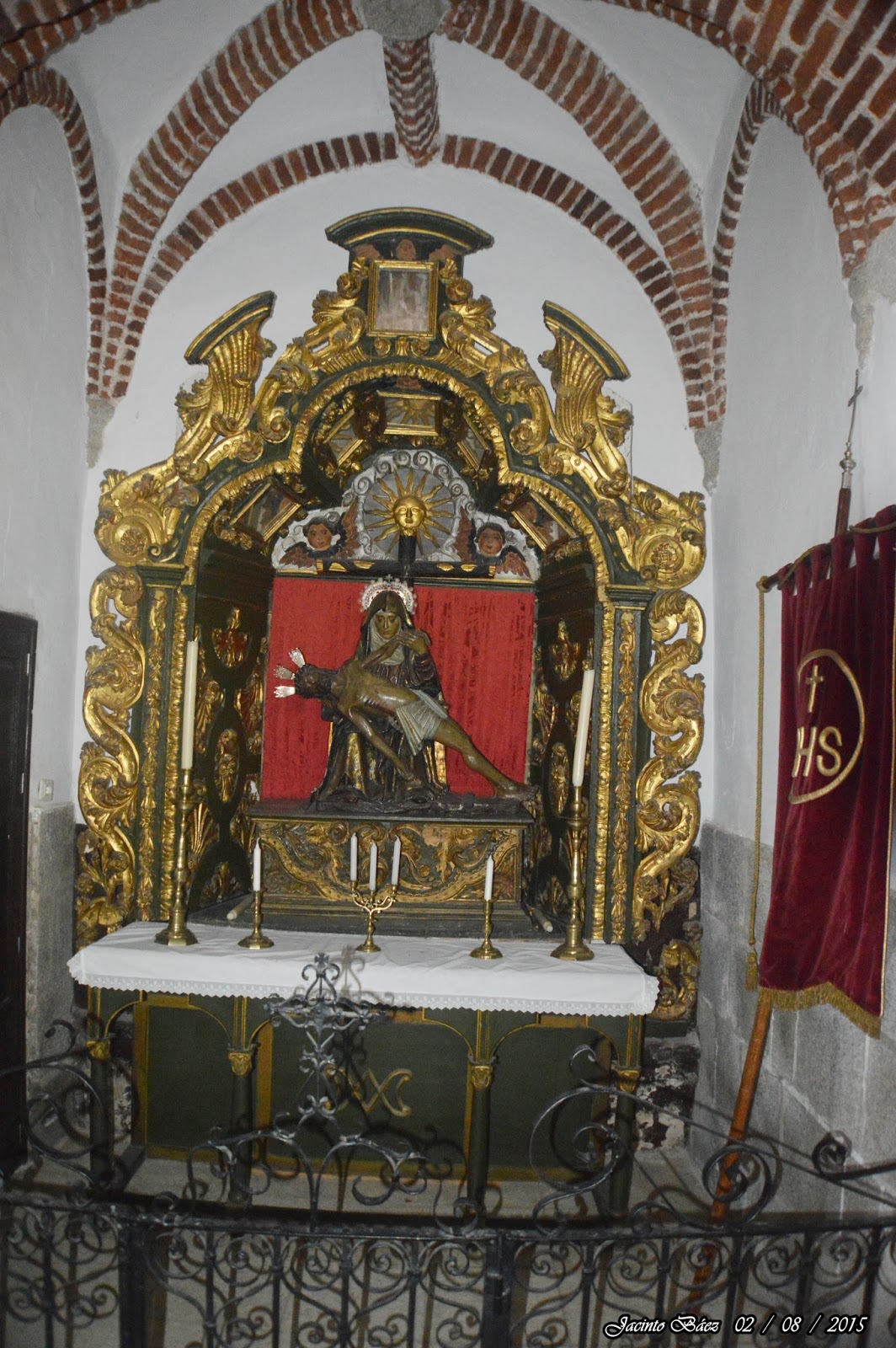
En la capilla del Sagrario, del siglo XVIII, se encuentra la imagen de la Virgen del Rosario y un pequeño mausoleo de la familia Vargas Zúñiga Jaraquemada, así como las imágenes de San Sebastián y San Roque y un cuadro de la Virgen de los Remedios, patrona de la ciudad, de quien se desconoce su autoría.
|
 |
The church of Santa Maria de la Plaza is located in the center of Fregenal de la Sierra (Badajoz). Considered the main church of the town, and as the oldest and most important, attached alCastillo appears.
Attached to a Templar fortress, it was built around 1260 by the Order of Santiago. It was remodeled in the eighteenth century where will be the altarpiece. In the early church only the facade remains, the front facing the square and the tower. It has a rectangular nave with a semi-side of the epistle, known as the chapel of Sagrario chapel.Inside, the barrel vault with lunettes covers the nave and the six altarpieces attached to the wall (altarpiece of Christ of the Caridan, Mary Shepherd of Souls, of the Animas, San Pedro, Soledad Lavirgen and San Antonio Abad), except the apse is covered by a dome on scallops.
Also stand out for their artistic interest sculpture Christ of Charity, the sixteenth century, and the image of San Jose.In the altarpiece, dating from the eighteenth century (1732-1740), called attention to four columns supporting an arch mixtilíneo. The group's main image of the Virgin Mary, and his right and left St. Lucia and St. Lazarus respectively. In the pictorial order highlights the paintings of the Virgin of Guadalupe, the seventeenth century, located in the choir, and the San Antonio Abad and the Virgin Pastora, dating from the eighteenth century.
In the chapel of the Shrine, the eighteenth century, is the image of the Virgen del Rosario and a small mausoleum Jaraquemada Zuniga Vargas family, as well as images of San Sebastian and San Roque and a picture of the Virgen de los Remedios, patron saint, whose authorship is unknown.The organ is the work of José Larrea, Llerena carved in the eighteenth century. Confessionals, both richly decorated, are attributed to Enrique Barn.
|
 |
Die Kirche von Santa Maria de la Plaza befindet sich im Zentrum von Fregenal de la Sierra (Badajoz) entfernt. Sie gilt als die Hauptkirche der Stadt, und als das älteste und wichtigste, befestigt alCastillo erscheint.
An einen Templerburg angebracht wurde um 1260 durch den Orden von Santiago gebaut. Es wurde im achtzehnten Jahrhundert, wird das Altarbild sein umgestaltet. In der frühen Kirche bleibt nur die Fassade, die Front Blick auf den Platz und den Turm. Es hat einen rechteckigen Schiff mit einem semi-Seite des Briefes, wie die Kapelle des Sagrario Kapelle bekannt.Inside, das Tonnengewölbe mit Stichkappen deckt das Kirchenschiff und die sechs Altarbilder an der Wand befestigt (Altarbild der Christus des Caridan, Mary Shepherd of Souls, der Animas, San Pedro, Soledad Lavirgen und San Antonio Abad), mit Ausnahme der Apsis wird durch eine Kuppel auf Jakobsmuscheln bedeckt.
Auch zeichnen sich durch ihre künstlerischen Interesse Skulptur Christus der Nächstenliebe, dem sechzehnten Jahrhundert, und das Bild der San Jose.Im Altarbild stammt aus dem achtzehnten Jahrhundert (1732-1740), die Aufmerksamkeit auf vier Säulen, die einen Bogen mixtilíneo. Die Gruppe der Haupt Bild der Jungfrau Maria, und seine rechte und linke St. Lucia und St. Lazarus sind.
In der bildlichen Ordnung hebt die Gemälde der Jungfrau von Guadalupe, dem siebzehnten Jahrhundert, im Chor befindet, und dem San Antonio Abad und der Jungfrau Pastora, aus dem achtzehnten Jahrhundert.
In der Kapelle des Heiligtums, des achtzehnten Jahrhunderts, ist das Bild der Virgen del Rosario und ein kleines Mausoleum Jaraquemada Zuniga Vargas Familie, sowie Bilder von San Sebastian und San Roque und ein Bild der Virgen de los Remedios, Schutzpatron, dessen Die Orgel ist das Werk von José Larrea, geschnitzt Llerena im achtzehnten Jahrhundert. Beichtstühle, die beide reich verziert, an Enrique Barn zurückzuführen.
 |
L'église de Santa Maria de la Plaza est situé dans le centre de Fregenal de la Sierra (Badajoz). Considéré comme l'église principale de la ville, et comme le alCastillo ancienne et la plus importante, joint apparaît.
Rattaché à une forteresse des Templiers, il a été construit vers 1260 par l'Ordre de Santiago. Il a été rénové au XVIIIe siècle, où sera le retable. Dans l'église primitive que la façade reste, l'avant donnant sur la place et la tour. Elle possède une nef rectangulaire avec un semi-côté de l'épître, connue comme la chapelle du Sagrario chapelle.A l'intérieur, la voûte en berceau avec des lunettes couvre la nef et les six retables fixés au mur (retable du Christ de la Caridan, Mary pasteur d'âmes, de l'Animas, San Pedro, Soledad Lavirgen et San Antonio Abad), sauf l'abside est couvert par un dôme sur les pétoncles.
Se distinguent également par leur intérêt artistique sculpture Christ de la Charité, au XVIe siècle, et l'image de San Jose.Dans le retable, datant du XVIIIe siècle (1732-1740), appelé l'attention sur quatre colonnes qui soutiennent un mixtilíneo arc. Image du groupe principal de la Vierge Marie, et sa droite et à gauche Sainte-Lucie et Saint-Lazare, respectivement. Dans l'ordre pictural met en évidence les peintures de la Vierge de Guadalupe, au XVIIe siècle, situé dans le chœur, et le San Antonio Abad et la Vierge Pastora, datant du XVIIIe siècle.
Dans la chapelle du Sanctuaire, au XVIIIe siècle, est l'image de la Virgen del Rosario et un petit mausolée famille Jaraquemada Zuniga Vargas, ainsi que des images de San Sebastian et San Roque et une image de la Virgen de los Remedios, saint patron, dont la paternité est inconnue.L'orgue est l'œuvre de José Larrea, Llerena sculpté au XVIIIe siècle. Confessionnaux, à la fois richement décorées, sont attribués à Enrique Grange.
|